Showing posts with label 301-02. Show all posts

Sunday, October 31, 2010

Ranch : Perspectives


These are the beginning renderings I created. Using a ban through the center of the living room into the dining, I interlocked these spaces by keeping the same use of materials. Playing with Materials from soft to hard and maintaining the same color also helped me achieve my goal of intelocking each space.

With this model I looked at how light played with the negative and positive space.

Using this model to show color, I decided to show how the color would remain the same yet be used in a different way.

In the process of coming up with a concept for the Ranch house, we did a series of charettes. When considering, material, light and color, i planned on being consistent with the materials and interlocking them from room to room.

Thursday, October 14, 2010

Ranch : Parti


After analyzing my painting I then took into consideration a graphic that I would want to use to move forward in my project. The first set of Parti's 1-7 were beginning to look to much like the original painting so I then decided to drift away from what the artwork "looks like" and abstract it into what I thought described my concept. What I concluded with was that each space will contain something different, but at the same time one specific element in the previous room will tie into the next. This will then unify the previous space with the next, creating an interlocking theme throughout the house.

Friday, October 1, 2010

Ranch : Precedent Analysis


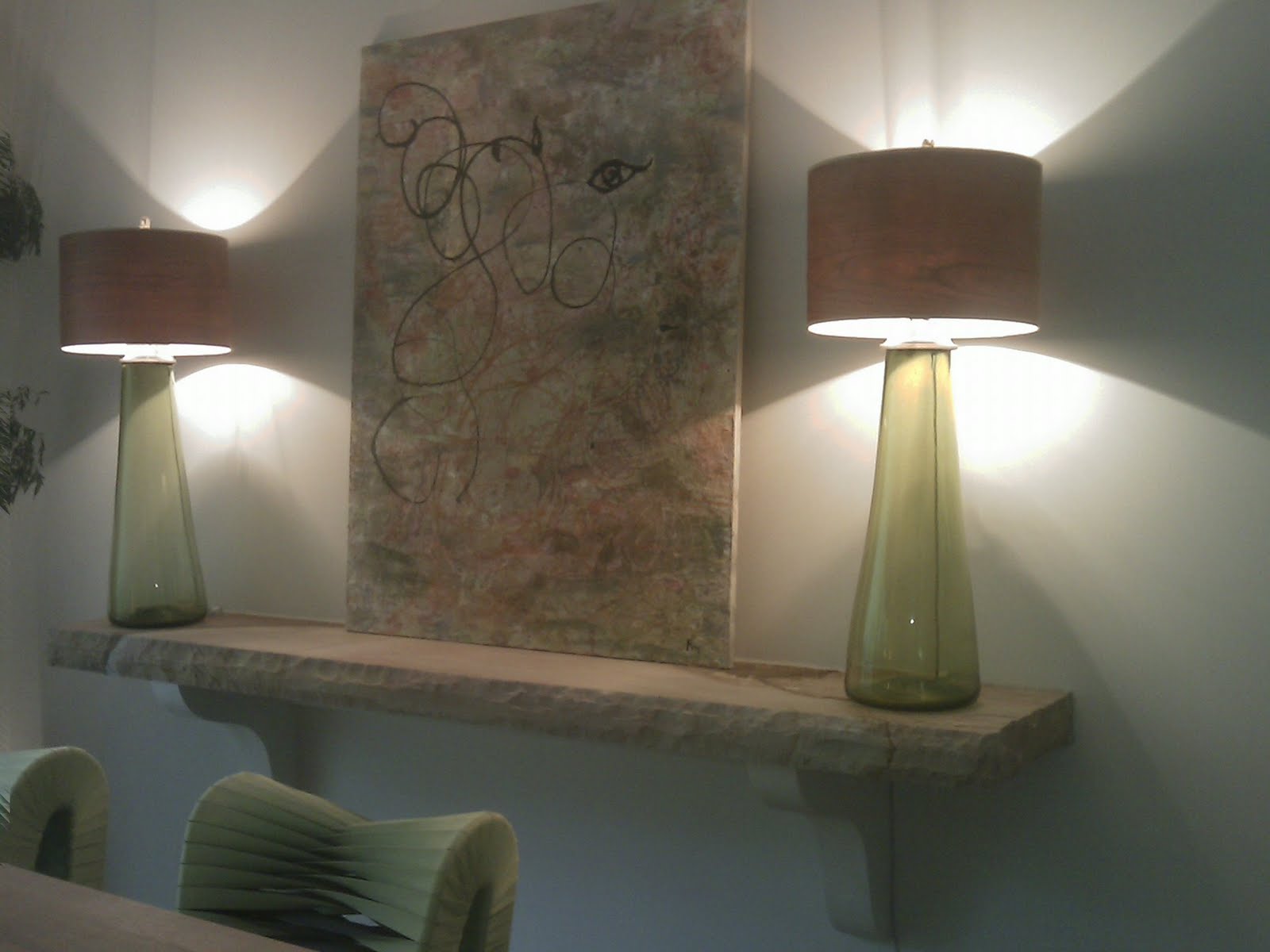
The next project consist of the redesign of a Ranch. This week we have began constructing the construction documents for this house, and investigating the differences between the previous "bungalow style" and "ranch style". This are some images that we were taken at a Ranch House in Greensboro, NC. I really enjoyed all the variety of furniture the house had as well as the unity it created.

Bungalow : Illusion Phase 2


After a process of design, the next to follow is hand renderings. Time consuming, dedication, no sleep and absolutely concentration. When working on these hand drawings one of the most key factors to keep in mind are the materials and shadows that the lighting may project.


Saturday, September 25, 2010

Bungalow : Illusion


Working this week through the process of creating a dining room that we felt was inspired using both methods of creating a space that mimicd the Arts and Crafts era as well as incorporating our concept. I felt that linearity had a lot to do with this period and keeping a consistency of materials throughout the space. The arts and craft movement always revolved around wooden material so I felt that keeping this material in my space would bring it all together. In the end, I played with creating many areas in my space that would give an illusion of things that seemed real or seemed closer but really were not.

Thursday, September 16, 2010

Everyday Magazines

When investigating Furniture South Magazine in 1969 I came across many unique features. In this magazine you come across a series of advertisements that while displaying their furniture, they are also creating a line of competition within the other similar furniture companies. One of the most common features throughout the magazine was the way they displayed the furniture sets that consisted of a sofa, love chair, coffee table and recliner. However, when displaying these sets they really did not care about the effect it caused within the space. Many of the images never matched. Each different piece of furniture consisted of different fabric styles. Many had animal prints and others where just bright colors. They also would use repetition of articles where they would only change the character and leave the same sayings. Overall, its a magazine filled with variation of furniture and different styles.

Great Houses Process.


Edwin Lutyens was one of England's most prominent designers. When he designs his houses he keeps them symmetrical and adds mass forces to keep people promenading throughout the space. When begin to design the boards, I began with thinking that the two most important things on the board were the floor plans. However, as I kept moving things I realized that movement and was the most important. This led to my final board layout where I made the floor plan the most important and laid images around it to make it symmetrical. These are some facts about Homewood.


Project Statement:

One of England’s most prominent and inventive architects, Edwin Lutyens, deploys axial complexity into traditional buildings, playing the idea of a symmetrical building against asymmetrical movement throughout the scheme. At Homewood, Lutyens uses masses – staircases, chimneys and walls – to separate and define circulation patterns, resulting in intricate experiences within harmonious interiors.


Site Plan

The seven acre (three hectare) site features a garden, also designed by Lutyens, linking house to land through sophisticated interior/exterior relationships and development of exterior “rooms” in the garden.


Materials and furnishings

In the Arts and Crafts movement, material expression remained a major approach to design. Consistent with this philosophy, at Homewood, Edwin specified white-washed plaster, wood and brick, allowing the simplicity of the materials to shine through and enhance the space through contrast. Of color, Lutyens suggested that: “Black is conductive to magnificence. It gives life to white molding.”


Lighting

With natural light as his main light source, Lutyens took advantage of this source in all rooms but the drawing room.


Spatial Adjacencies

Typical for Lutyens’ houses, the plan takes the form of an H or a square. Users accessed minor and servant spaces with corridors, wherein public rooms, the designer fashioned a promenade for users to move through. At Homewood, Lutyens distorted the square plan to accommodate a larder and scullery, both related to kitchen uses.


Did you know?

Homewood, also known as the Dower House, served as the residence for Dowager Lady Lytton who later became Lutyen’s mother-in-law. With an Arts and Crafts aesthetic, Lutyens purposely made this place “simple and vernacular,”. belying its complexity when looking at it closely, revealing a complex and clever design “incorporating mannerist detail.”

“In essence, it’s one of those pretty little gable houses, with weather-tiled upper floors, to which the young aspire and the elderly withdraw”.[

Wednesday, September 15, 2010

Inspiring : Bungalow

While taking the above house as an initial inspiration, we are to take forth our new assignment. We must remodel the dining room of this space. Using the arts and crafts movement as a place to begin with our design I have decided to take into consideration the way the space is divided. When sitting in the dining room you can easily see the living room. So by taking this into deliberation my focal point will be emphasizing the areas that will have the most impact to the dining room. This includes the overall entrance coming from the living room and the entrance coming from the kitchen. By taking some of Lutyens arts and crafts inspiration, i want to create a space that is symmetrical with its design as well as creating movement with the furniture design.

Friday, September 10, 2010

602 North Mendenhall


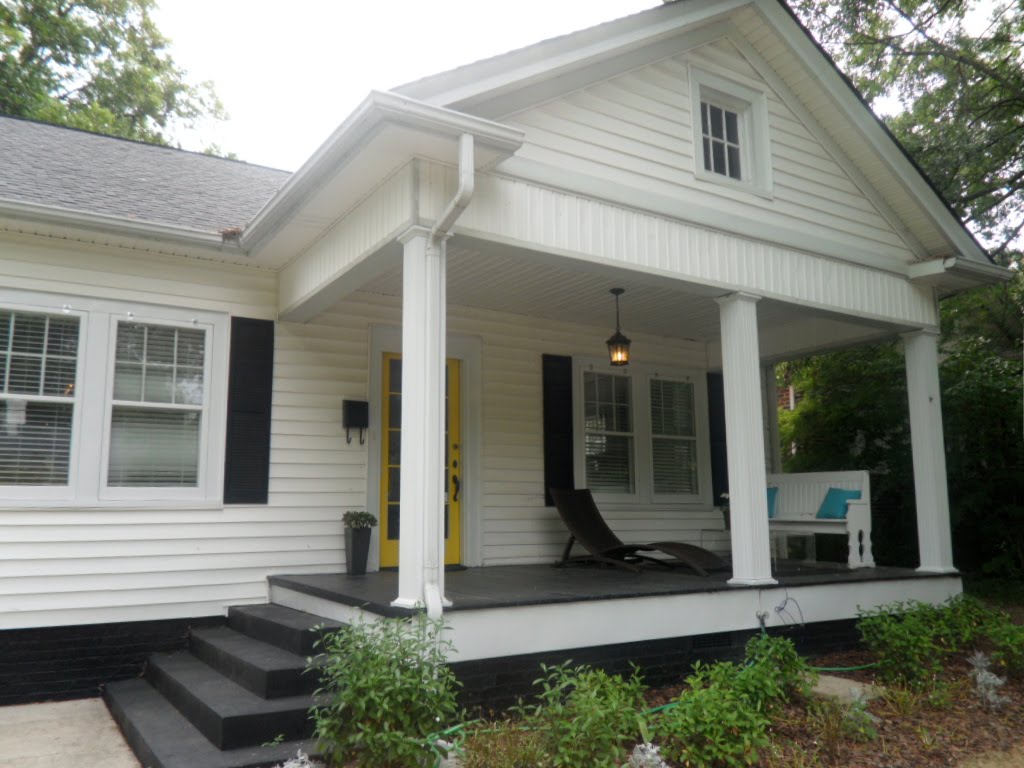
When arriving at 602 North Mendenhall I didn’t know what to expect on the inside. When first approaching the house you come to a bright yellow door. However, when you enter, you encounter a living space, that with the design of the owner is very modernized. While still keeping the historic look with the trim work and fireplace and mantle design, this house has an astounding foresight. The living room and dining room area have an open division where you can see whats going on in the other room. Every other room has its own division where it occupies its own space. I really enjoyed the overall look of this Historic house.

Saturday, August 28, 2010

GHA Renovated Home

The 2010 Tour of Remodeled Homes was a great experience to see how they took a historic home and turned it into a modernized home. In many instances we encountered many different houses where the client had a lot to do with the design.


House #9 : Kevin Jones Design - Remodeled Deck/Sunroom
Overall this house had a design that fit very well with the small house. The materials they used outside was a very delicate stone. The furniture made it feel very cozy and overall a great place for the family to come out and take some time to just relax.


House #10 : DLM Builders, Inc. - Screen Porch Addition
This screen porch addition was very successful. The ceiling style was a V groove ceiling which I felt was very successful. One of the things that these contractors said about this particular design was how the family there wanted a place to celebrate special events, such as, superbowl and parties. I think the design itself was great, however, for the purpose they where designing it, didnt really work. The sunroom was more of a place for the family to come out and just relax.


House #13: Brickwood Builders, Inc. - Master Suite Addition w/ Bonus Room and Kitchen Update.
Overall I felt that this was one of the best designs I saw throughout the tour. Here the builders concentrated on the client and their parents aging. Since many time elders have trouble going up steps they decided to add a master bedroom that not only would benefit them, but also would make it a living space that consisted of all their needs in one. The master bedroom had seating, a morning bar, a little kitchen and a bath. This way the parents would only have to stay within their own limited walking distances. In the upstairs area, they included a Kids area that would include overall extra storage space. In the kitchen, one of the best features added was a built in desk area.


House#14: Booe Building & Remodeling - Kitchen and Den
As well as the above house, this couple remodeled their kitchen to accommodate the needs of their 6 year old daughter. While creating "one big useable space" they joined their kitchen, dining and living room areas. There were no dividing walls between these spaces. To make it easily accessible for their daughter, they installed the microwave unit underneath the island. This was a little lower then waist height. Another interesting factor of this house was how they camouflaged their dish washer into the cabinets to keep away from their daughter. One of the most interesting facts about this place was that all the equipment was bought off of craigslist by the owner.